Publications
When Europe Fails to Agree and Others Fill theGap
For years, the European Union has pursued a mission as ambitious as it is necessary: to develop the capabilities required to guarantee its own security in an increasingly uncertain international environment.
The concept was relatively straightforward, yet extraordinarily difficult to implement, particularly when one considers that the EU is composed of 27 Member States. If Europe aspired to greater strategic autonomy, it would also need to develop the technologies and systems that underpin that autonomy. Among the most symbolic of these ambitions was the combat aircraft of the future.
That was the original vision behind the Future Combat Air System (FCAS), launched by France, Germany and Spain. Yet while Europe focused on debating the future, the present continued to move forward.
The result is a paradox that is difficult to ignore: at the very moment when Europe has been debating technological sovereignty and strategic autonomy, the American-built F-35 has become the combat aircraft of choice across much of the continent.
Against this backdrop, the question is no longer why Europe is buying the F-35; the question is how Europe reached a point where it felt compelled to do so.
The Problem Was Never the Aircraft
First and foremost, it would be a mistake to interpret the difficulties surrounding FCAS as the failure of a technology programme. In reality, technology has never been the principal obstacle.
Europe possesses the industrial capabilities, talent, expertise and resources required to compete in the race to develop next-generation air combat systems. The challenge lay elsewhere.
For years, the programme has been shaped by tensions over industrial leadership, workshare arrangements, intellectual property rights, operational requirements and technological sovereignty. These concerns are entirely legitimate from the perspective of each participating nation, yet extraordinarily difficult to reconcile within a single multinational programme.
France sought to preserve capabilities linked to its nuclear deterrent and carrier-based aviation. Germany advocated for a more balanced industrial model. Meanwhile, Spain aimed to secure a significant role in areas such as sensors, the combat cloud and the system’s digital architecture. None of these positions were unreasonable.
The challenge was greater than any individual national ambition. All of these priorities coexisted within a programme that required a common direction, leading to one of the most uncomfortable lessons of European industrial policy: sharing funding is relatively easy; sharing leadership is considerably more difficult.
The Strategic Clock Does Not Wait
While Europe debated how to build the combat system of the future, operational requirements continued to evolve. Aircraft fleets are ageing, replacement cycles have fixed timelines, and geopolitical risks do not pause while governance structures are negotiated.
This explains why Germany acquired the F-35, why Italy strengthened its commitment to the Global Combat Air Programme (GCAP), and why other European nations have pursued similar paths. Not because they have abandoned the idea of a strong European defence industry, nor because they have given up on strategic autonomy, but because they required a solution that was available today.
There is a fundamental difference between a capability promised fifteen years from now and a capability that can be deployed tomorrow.
In a strategic environment shaped by the war in Ukraine, growing pressure on NATO’s eastern flank and increasing uncertainty regarding the future international order, that difference matters more than ever.
Much More Than an Aircraft
Perhaps the most common mistake in this debate has been to assume that it revolves around a particular aircraft.
It does not.
Today’s strategic competition is no longer fought solely between platforms; it is fought between ecosystems.
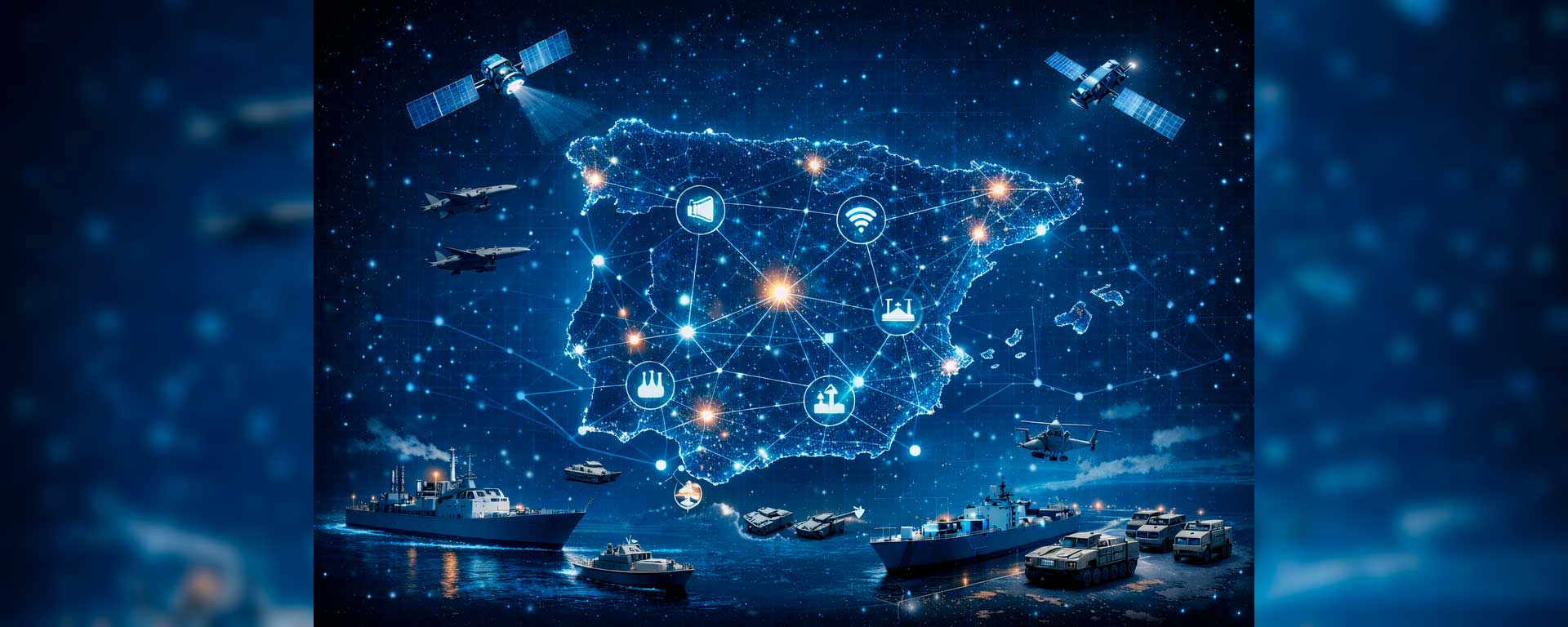
Next-generation combat systems integrate artificial intelligence, distributed sensors, electronic warfare, secure communications, large-scale data processing, autonomous systems and collaborative capabilities linking crewed and uncrewed platforms in real time.
The aircraft remains important, but it no longer represents the centre of gravity of the system. It is increasingly a node within a much broader network.
This is precisely why many of the technological developments generated within FCAS retain strategic value even if the programme itself does not survive in its current form.
The combat cloud, advanced sensors, digital architecture and autonomous system integration will remain critical capabilities regardless of the name ultimately assigned to Europe’s future air combat programme.
Strategic Autonomy Requires Decision-Making Capacity
The lessons from FCAS extend far beyond military aviation.
The European Union has spent years discussing strategic autonomy, and with good reason. Recent experience has demonstrated the importance of reducing critical dependencies in areas ranging from energy and semiconductors to raw materials, digital infrastructure and defence.
Yet strategic autonomy does not depend solely on funding and industrial capabilities. It also depends on the ability to make decisions.
The FCAS experience demonstrates that the challenge does not always lie in developing advanced technologies. In many cases, the real difficulty lies in creating governance mechanisms capable of reconciling national, industrial and strategic interests without paralysing execution.
This question is particularly relevant as Europe enters a period marked by unprecedented investment in security and defence. The resources exist, political willingness is stronger than it was only a few years ago, and the strategic necessity is undeniable.
What remains to be proven is whether European decision-making structures can evolve at the same pace as the environment around them.
Beyond the F-35
It would be tempting to interpret the success of the F-35 in Europe as a defeat for the continent’s defence industry.
That would be the wrong conclusion.
What this situation reveals is not the inevitable superiority of one platform over another, but rather the tension between immediate operational requirements and the long-term construction of strategic capabilities.
Europe needs both.
It requires capabilities that can respond to today’s security challenges, while simultaneously building the industrial and technological base that will sustain its security for decades to come.
The paradox, as recent developments have shown, is that these two ambitions do not always move at the same speed.
For that reason, the real debate is no longer whether Europe should purchase the F-35 or develop its own future combat systems. The issue is far more profound.
Europe must determine whether it can transform its ambitions for strategic autonomy into capabilities that are real, operational and sustainable.
Because while European governments continue to debate what their next-generation combat aircraft should look like, the F-35 is already flying.